
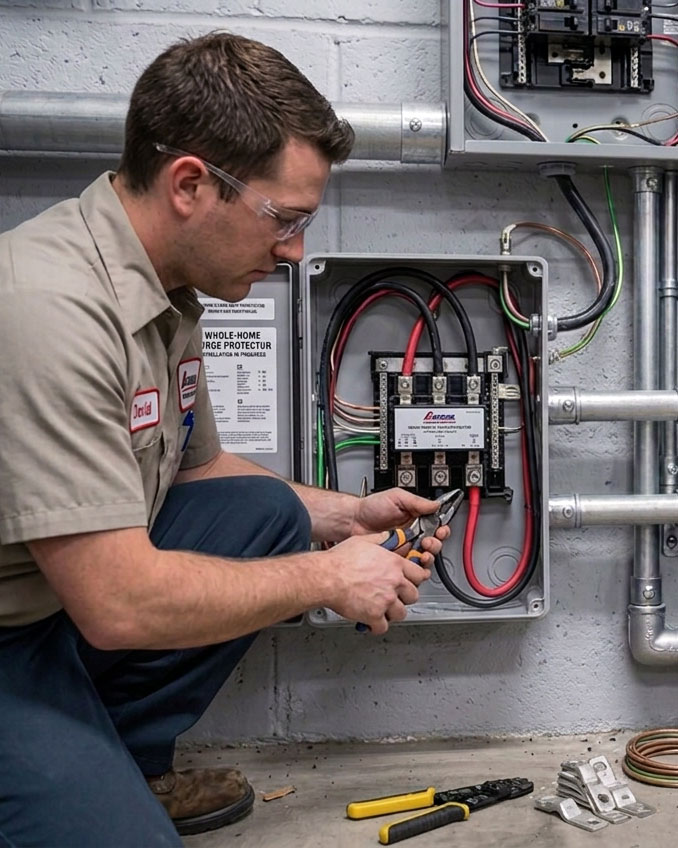
Arctic Installs Whole-Home Surge Protectors
A whole-home surge protector helps reduce the voltage spikes that can damage appliances, HVAC equipment and electronics. Installed at or near your electrical panel, it adds protection across your home’s electrical circuits rather than just at a few outlets. It cannot prevent every kind of electrical damage, but it can be a useful part of protecting the equipment you rely on.
At Arctic Heating, Cooling & Electrical, we offer whole-home surge protector installation for homeowners in Grand Rapids, MN and the surrounding areas. Understanding what the service does, where its limits are and why installation matters can help you decide whether it belongs on your home improvement list.
What Does a Whole-Home Surge Protector Do?
A power surge is a brief, unwanted increase in voltage. Some surges can damage electronics immediately. Others can contribute to deterioration through repeated exposure.
A whole-home surge protective device, often called an SPD, limits surge voltage by diverting surge current away from the equipment it protects. Think of it as a way to reduce the electrical spike reaching connected equipment, not a barrier that stops every electrical problem.
Unlike a plug-in protector behind your television, a panel-connected device can help protect hardwired equipment too. That broader coverage is one reason homeowners consider it alongside individual surge protectors.
What Equipment Does Surge Protection Help Protect
Consider the appliances and systems connected throughout your home, not just the electronics sitting on your desk. Equipment worth discussing with an electrician includes:
- Furnaces, air conditioners and heat pumps
- Refrigerators, freezers and laundry appliances
- Computers, televisions and home entertainment equipment
- Smart-home controls and security equipment
A panel-connected protector can help reduce surge exposure for equipment on the circuits it serves. However, the electrical layout and other connections matter. For example, equipment connected to incoming cable or telephone lines may need protection on those pathways too.
If you are replacing HVAC equipment or upgrading appliances, it is a practical time to review how those investments are protected.
What’s Involved in Professional Installation
Our electricians assess your electrical system, the panel, the proposed installation location and the home’s grounding and bonding. Grounding and bonding provide essential electrical connections that support safe system operation and proper surge protector performance. Device compatibility, connection requirements and the manufacturer’s instructions also matter.
Installation generally involves mounting or fitting the selected device at the appropriate location, making its electrical connections and checking its operating status according to the manufacturer’s instructions. Connection layout affects performance, so placement is more than a cosmetic decision. Our electricians will also determine whether any existing conditions should be addressed before installation.
What Affects Installation Cost
The price depends on the device selected and the work needed to install it correctly. Panel compatibility, available installation space, electrical connections and any necessary corrective work can all affect the scope. Manufacturer requirements and the layout of your electrical system influence those decisions.
An assessment helps distinguish a straightforward installation from one that needs additional work. When discussing an estimate, ask what equipment is included and whether panel or grounding corrections are part of the proposed service.
Contact Arctic About Installation
If you are considering whole-home surge protection in Grand Rapids or a surrounding community, contact Arctic Heating, Cooling & Electrical. We can discuss your home’s electrical setup and whole-home surge protector installation needs.
Call our team at 218-999-0036 to get started or fill out our Contact Form.

Where Do Power Surges Come From?
Surges do not always start outside your home. Everyday electrical equipment can produce them when motors and other electrical loads switch on or off. Air conditioners and other large appliances are common examples.
External sources include utility switching and lightning-related electrical activity. Nearby lightning can induce a surge without directly striking the house.
This does not mean every appliance starting up causes damage. It means surge protection addresses more than major storm events. There is no need to assume your home has unusually poor power quality to consider it.
Do You Still Need Plug-in Surge Protectors?
Often, yes. Whole-home and point-of-use protection serve different roles and can work together.
A whole-home device provides protection at the panel. A plug-in surge protector adds another layer close to sensitive electronics, such as a computer or television. Electrical industry guidance recommends this layered approach rather than relying on a single device for every situation.
A basic power strip is also not necessarily a surge protector. Check that the product actually provides surge protection and follow its instructions for use and replacement.
What Are the Limits of Whole-Home Surge Protection?
Whole-home surge protection reduces risk. It does not guarantee that appliances or electronics will never be damaged.
No surge protector can guarantee protection against a direct lightning strike. A panel-mounted device also does not eliminate the need to address faulty wiring or protect other incoming connections where appropriate.
Surge protectors do not last indefinitely. Follow the selected device’s instructions for checking its protection-status indicator and arranging replacement when needed.
Why Choose Arctic for Whole-Home Surge Protector Installation
- Licensed and insured electricians
- Residential and commercial installations
- All major brands supported
- Panel upgrades handled in-house
- Clear pricing before work begins
- One team for HVAC and electrical